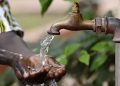

The Kano State Ministry of Water Resources has set a target of provision of 100 litres of water per each resident daily.
The state’s Commissioner of Water Resources, Dr Dahiru M. Hashim, disclosed this on Friday at a press conference to update the general public about the ongoing efforts by the ministry to restore steady water supply in the state.
According to him, the global daily water demand per individual by the United Nations, UN, is put at 250 to 680 litres.
He however said the ministry was trying to provide, at least, 100 litres daily water demand per individual, under the Kano State Water Plan.
“The global demand per individual per head, as UN have it, is from 250 to 680 liters by individual per day. And here in Kano, we are even trying to take the least, which is 100 liters per day. This is the target we have under the Kano State Water Plan.
” We are trying to make prohibition of 100 liters per individual, and if you take the Greater Kano, for example, all the metropolis. If you are having 10 million people in these 9 to 11 local governments, then, that means you are to provide 1 billion liter of water to them,” the Commissioner said.
He noted that to achieve the target, the state’s existing water infrastructures have to work at full capacity, that is why, according to him, the government working hard to ensure the state’s water treatment plants are rehabilitated by the end of December.
Hashim also stated that the ongoing rehabilitation of Challawa and Tamburawa water plants had reached an advanced stage, adding that significant progress had been recorded in the restoration of water supply to parts of metropolitan Kano.
According to him, following the progress recorded, water had been pumped from Challawa Water Works to the Goron Dutse reservoirs, with a reported capacity of 42.5 million litres.
He disclosed that before the inception of the administration of governor Abba Kabir Yusuf, there was zero litre in the Goron Dutse reservoirs
He further stated that water had been released into the existing distribution network, adding that ” we have confirmed its arrival in several communities across the metropolis.”
“These include Goron Dutse, Gwammaja, Kwanar Dala, Jakara, Kofar Mazugal, Muskwani, Aikawa, Dukurawa, Dandalin Turawa, Kabara, Darma, Agadasawa, Kofar Wambai, Dukawa, Mandawari, Daneji, Dandago, Hausawa, Sani Mainagge, Yalwa, Fagge, Tudun Wada, Gama, Kofar Ruwa, Kwanar Taya, Yan Awaki, Madatai, Alfindiki all in ancient Kano, and several other communities, alongside ongoing restoration efforts from Watari and the construction of numerous boreholes across underserved areas to curb water scarcity.
“The impact of this restoration is already being felt in households and local businesses.
“This is an important milestone in our determination to reverse years of inadequate water supply and restore public confidence in the state’s water infrastructure.
” However, we wish to emphasise that this is an ongoing process, and the government is not presenting the current level of supply as the completion of its water sector interventions, he emphasized.
He noted that following the restoration of water flow into the distribution network, the Ministry had identified several leakages and recorded cases of burst pipes across different locations.
Hashim stated that works are in progress to repair the licking pipes, calling on the public to understand that some of the pipelines had remained without regular water flow for many years.
The Commissioner also disclosed that the Ministry is working to improve the water distribution network so that increased production at the treatment plants translates into actual water availability in households and communities.
While commending Yusuf for his support, the Commissioner stated that the government is pursuing a comprehensive approach that addresses both water production and distribution in the state.