
The Nigerian Senate’s proposal to impose a total ban on textile imports has reignited a familiar national debate: how can Nigeria revive domestic industry without inflicting deeper economic pain on businesses and consumers already struggling under inflation and weak infrastructure?
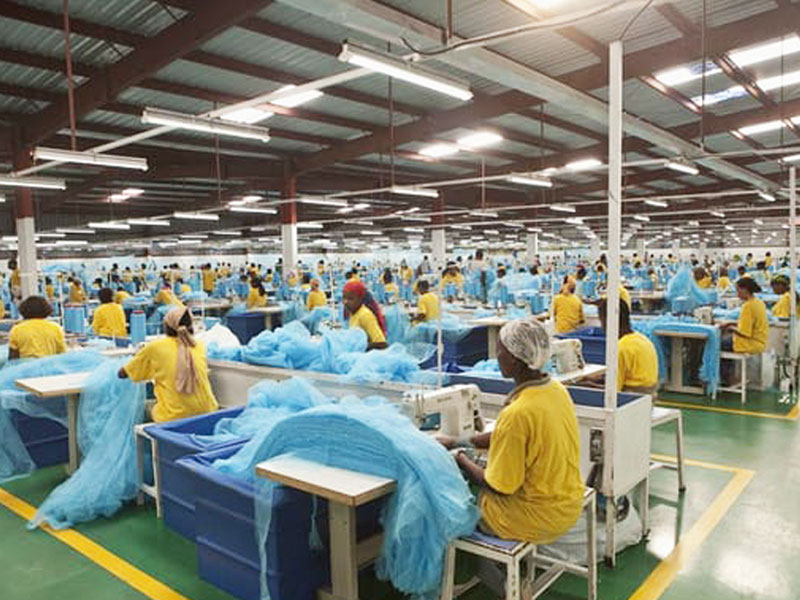
At first glance, the policy appears patriotic and economically sensible. Nigeria once possessed one of Africa’s largest textile industries, with more than 175 functioning mills employing hundreds of thousands of workers across cities such as Kano, Kaduna, and Lagos. Today, that industrial backbone has largely collapsed. Fewer than 25 mills remain operational, most running far below capacity, while the country depends overwhelmingly on imported fabrics, garments, threads, and accessories to satisfy local demand.
Supporters of the proposed ban argue that Nigeria can no longer continue exporting jobs, draining foreign exchange, and surrendering its industrial future to Asian manufacturers. In principle, they are correct. No nation industrializes sustainably while importing nearly everything it consumes. Yet the real challenge lies not in the ambition of self-reliance, but in the timing and structure of the proposed policy.
A sudden and absolute ban on textile imports risks triggering a severe economic shock because Nigeria currently lacks the productive capacity to replace what it intends to prohibit. Domestic mills cannot immediately supply the enormous gap that imports presently fill. The likely result would be a rapid shortage of fabrics across major commercial centers, followed by sharp increases in prices for everyday clothing materials, ceremonial fabrics, and fashion accessories.
For ordinary Nigerians, clothing could quickly shift from a basic necessity to an increasingly expensive commodity. Markets that depend heavily on imported inventory; such as Balogun and Idumota in Lagos, Kantin Kwari in Kano, and Ariaria in Aba, would face different but equally disruptive pressures. In Lagos, fashion retailers and designers who rely on imported laces, Ankara, and luxury fabrics would struggle to maintain inventory.
Nigeria’s vibrant Aso-Ebi culture, which supports thousands of small businesses and event-related enterprises, could experience a major commercial squeeze. In Kano, merchants involved in the centuries-old trans-Saharan textile trade may lose regional buyers to neighboring countries such as Togo and Ghana if Nigeria can no longer provide the quality and quantity of fabrics demanded across the Sahel. Perhaps most vulnerable is Aba’s manufacturing ecosystem. Ariaria Market has become one of West Africa’s largest informal garment-production hubs, but its tailors and shoemakers depend heavily on cheap imported raw materials. If those inputs disappear before local alternatives emerge, thousands of small-scale producers could be pushed out of business long before any industrial revival materializes.
The deeper contradiction within the proposed ban is that foreign competition alone did not destroy Nigeria’s textile sector. The industry declined primarily because of structural failures at home. Textile manufacturing requires stable electricity, efficient transportation, reliable financing, and functional industrial infrastructure.
Nigeria has struggled for decades in all four areas. Most surviving factories rely on diesel generators to compensate for unstable power supply, making local production far more expensive than imported alternatives. Under such conditions, banning imports may protect domestic manufacturers temporarily, but it does not make them competitive.
Protectionism cannot substitute for electricity, transport logistics, or affordable industrial financing. History also suggests that outright bans rarely eliminate demand in Nigeria. Instead, they often push commerce underground. With porous borders stretching across Benin Republic, Niger, and Cameroon, textile imports are unlikely to disappear entirely. Rather, trade routes would shift from formal ports to informal smuggling corridors. Goods would continue entering the country through neighboring ports in Cotonou and Lomé before being smuggled into Nigerian markets through illegal border crossings and compromised checkpoints.
The unintended consequence is predictable: consumers still pay higher prices, legitimate businesses suffer, government customs revenues decline, and smuggling syndicates become richer. This is why many economists argue that the real issue is not whether Nigeria should protect its textile industry, but how it should do so. Countries that successfully rebuilt local manufacturing sectors did not rely on abrupt prohibitions alone. They combined gradual protection with heavy investment in production capacity, infrastructure, and agricultural supply chains.
Nigeria’s cotton sector illustrates this problem clearly. The country cannot sustain a major textile revival without first rebuilding cotton farming and processing. Production has declined sharply over the years due to poor seed quality, weak incentives for farmers, collapsed ginneries, and inconsistent agricultural support programs.
Many cotton farmers have already switched to crops such as maize and soybeans because they offer faster and more reliable returns. Without fixing this upstream crisis, downstream industrial policies will remain ineffective. A textile ban imposed on a weak agricultural foundation would simply create scarcity rather than self-sufficiency.
The more realistic path forward is a phased industrial transition. Instead of an immediate total ban, Nigeria could gradually increase import tariffs over several years while channeling the revenue into targeted industrial development. Funds should be directed toward rehabilitating textile clusters in Kano and Lagos, financing modern machinery, supporting cotton farmers, and creating dedicated industrial power zones with reliable electricity.
The government must also bring major textile traders into the industrial transition rather than treating them solely as adversaries. Many of the country’s largest importers possess the capital, networks, and market knowledge needed to invest in local manufacturing if the right incentives exist.
Regional examples offer important lessons. Benin Republic has focused on processing cotton domestically instead of exporting raw materials. Togo has attracted manufacturers by prioritizing reliable infrastructure and efficient industrial zones. Ghana has attempted to combine import restrictions with anti-smuggling enforcement while protecting local textile brands.
In each case, the central lesson is the same: industrial policy succeeds when governments build competitive production ecosystems, not when they merely close borders. Nigeria’s desire for textile self-reliance is understandable and long overdue. Reviving domestic manufacturing could create jobs, strengthen the naira, reduce import dependency, and reconnect agriculture with industry.
But industrial transformation cannot be achieved through decree alone. An immediate import ban, implemented without solving the country’s energy, financing, and agricultural constraints, would likely deepen inflation, disrupt commerce, and expand illicit trade networks. Real self-reliance requires long-term institutional discipline, infrastructure investment, and carefully sequenced reforms.
The textile industry can still be revived, but sustainable industrial growth must be built from the factory floor and the cotton farm upward, not enforced overnight at the border.
Usman Abdullahi, PhD, writes from Sintok, Malaysia.