
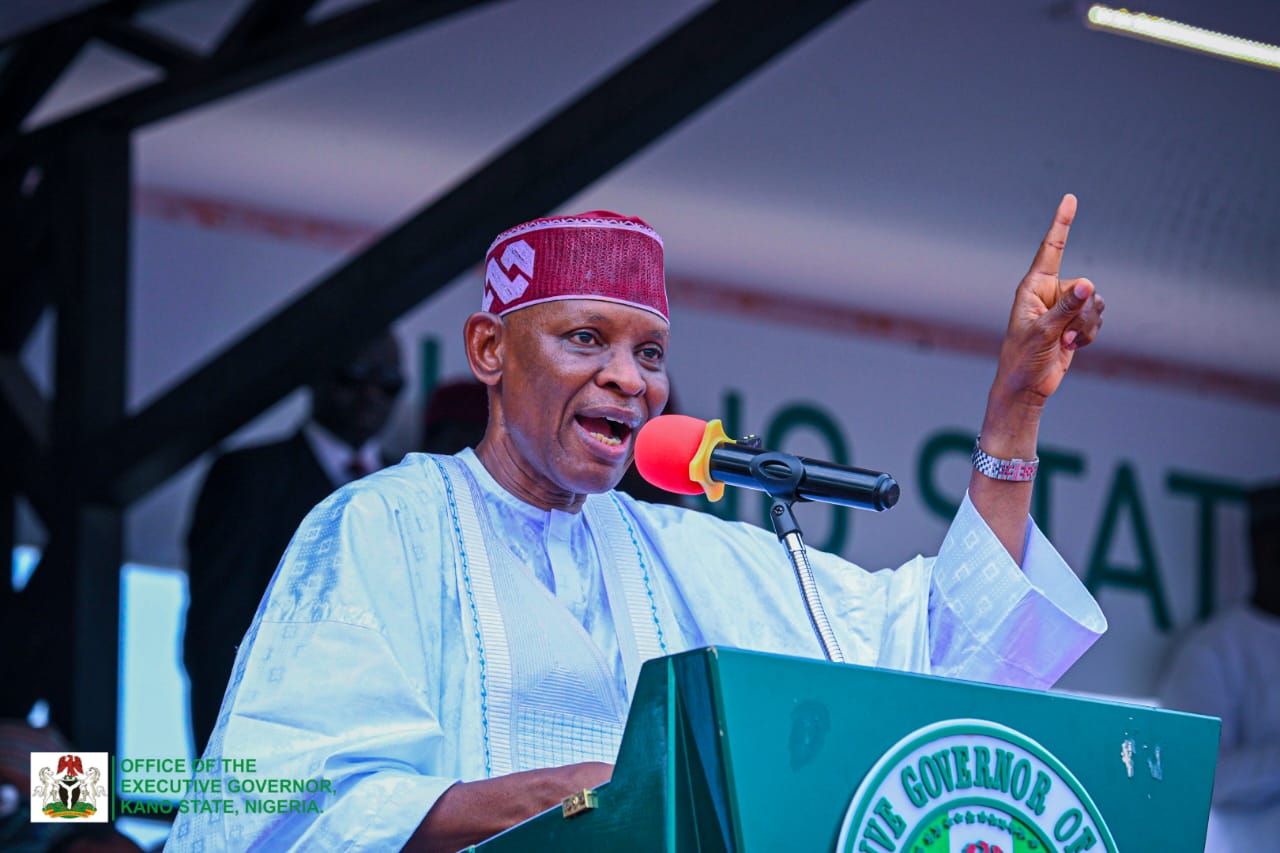
In Nigerian politics, where power is consolidated through alliances, influence is demonstrated through mobilisation, and electoral victories are shaped long before ballot papers are cast, Governor Abba Kabir Yusuf of Kano State is positioning himself as one of the most consequential northern allies of President Bola Ahmed Tinubu ahead of the 2027 presidential election. His political posture suggests a calculated conviction that Kano’s enormous electoral weight, commercial significance and historical influence must be deployed to strengthen Tinubu’s re-election prospects and secure a more strategic place for the state within the national power equation.
While several political leaders have declared support for the President, Yusuf appears determined to give his own commitment a distinct identity through visible political mobilisation, public identification with Tinubu’s political symbols, engagement with influential stakeholders and support for initiatives designed to consolidate the President’s northern constituency. From the adoption of the President’s distinctive maroon-coloured cap bearing the broken-shackle emblem to the hosting of strategic political gatherings and participation in grassroots mobilisation efforts, the Kano governor is sending a message that leaves little room for ambiguity about his political direction.
His emerging role raises a compelling question in the calculations of 2027: could Abba Kabir Yusuf become the North’s most influential political bridge to Tinubu’s second-term ambition?
The answer will depend on the comparative efforts of other northern leaders, the evolving political landscape and, ultimately, the choices of the electorate. Nevertheless, Yusuf’s growing visibility in the President’s support structure presents him as a political figure whose activities deserve close attention as the contest for 2027 gathers momentum.
At the heart of his strategy lies a fundamental political calculation: Kano must not merely count its numbers when the struggle for national power begins; it must convert those numbers into influence, negotiation and opportunities for development. For a state whose population, commercial networks and political traditions give it an exceptional place in Nigeria’s democratic calculations, the relationship with the Presidency carries implications that extend beyond party loyalty.
Yusuf’s approach reflects an enduring truth about political power: occupying the seat of government is one thing; possessing the influence to shape the direction of national affairs is another. The leaders who command lasting relevance are often those who can build bridges between constituencies, organise political interests and translate relationships into tangible benefits for the people they represent.
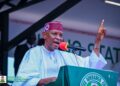
One of the most striking expressions of Yusuf’s political identification with Tinubu is his adoption of the President’s distinctive maroon-coloured cap bearing the broken-shackle emblem. By embracing the symbol and encouraging his appointees and political loyalists to adopt the same dressing style, the governor has made his political association visible to the public.
In Nigerian political culture, symbols often communicate messages that speeches cannot fully capture. A cap, a colour, a slogan or a familiar emblem can become a powerful instrument of collective identity, allowing supporters to recognise one another and identify with a broader political movement.
The maroon cap has consequently become more than a fashion accessory in the political environment surrounding Tinubu. It represents a recognisable expression of association with the President’s political project. For Yusuf, wearing the insignia is a public statement of solidarity and an indication of where he stands as the country approaches another consequential electoral contest.
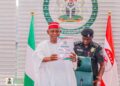
The significance of this distinctive political identity came into sharp focus on Wednesday, October 14, 2026, when President Bola Ahmed Tinubu publicly praised Governor Yusuf’s distinctive maroon-coloured cap at the inauguration of the APC Presidential Campaign Council in Abuja. The President’s remarks elevated the cap from a recognisable political symbol to a subject of national significance, highlighting its message of liberation from poverty, illiteracy, insecurity and other obstacles to Nigeria’s development.
Addressing supporters at the inauguration, President Tinubu expressed admiration for the symbolism behind the governor’s cap, which bears an emblem of a broken shackle associated with freedom and liberation.
“I liked the symbol because it conveyed a clear message of liberation from the challenges that have continued to hinder the progress and development of society,” the President said.
He explained that the broken shackle represented the determination to break the longstanding cycle of poverty and free Nigerians from the social and economic difficulties holding them back. He further emphasised that poverty, illiteracy and insecurity remained major challenges confronting the country and required deliberate efforts to overcome them.
According to the President, the broken shackle was more than a mere symbol, as “it represented hope, freedom and the possibility of a new beginning for the people.”
Tinubu’s public appreciation of Yusuf’s distinctive appearance was significant not merely because the President singled out the governor’s cap for commendation, but also because of the message the emblem conveyed about the broader aspirations of his administration. By associating the broken shackle with the struggle against poverty, illiteracy and insecurity, the President gave the symbol a meaning that extended beyond political fashion to encompass the fundamental challenges facing Nigeria.
For Yusuf, the moment represented a remarkable recognition of the political identity he has deliberately cultivated through his public association with Tinubu and the President’s Renewed Hope Agenda. At a gathering devoted to organising the machinery for the 2027 presidential campaign, the governor’s distinctive appearance attracted the President’s personal attention and provided a memorable illustration of his visible identification with the administration’s political project.
Speaking shortly after the inauguration at the Presidential Villa, an elated Governor Yusuf expressed appreciation for the President’s recognition of his administration’s efforts to promote Tinubu’s leadership and strengthen the All Progressives Congress ahead of the 2027 general election.
“We rejoined APC with a good heart, with an intention to do our best in supporting Mr. President’s reelection bid,” the governor said.
Yusuf’s response reinforced the message behind his political realignment and public identification with Tinubu’s second-term ambition. His remarks presented the decision to rejoin the APC as a deliberate commitment to working with the President and contributing to the party’s electoral prospects.
The exchange between the President and the Kano governor has added a new dimension to the debate about Yusuf’s place in Tinubu’s northern political calculations. The President’s public appreciation of the cap, coupled with the governor’s unequivocal declaration of support, has further strengthened the perception that Yusuf is positioning himself among the most visible advocates of Tinubu’s re-election project in Northern Nigeria.
Although the President’s recognition does not, in itself, constitute a formal designation of Yusuf as his chief campaigner in the North, it represents a significant moment in the political relationship between the two leaders. It also reinforces the growing prominence of the Kano governor in the unfolding campaign narrative ahead of the 2027 presidential election.
Yet the significance of Yusuf’s approach extends beyond the symbolism of a cap. Political symbols acquire their greatest value when they are accompanied by organisation, communication and a demonstrable commitment to a shared objective. In Yusuf’s case, the maroon cap forms part of a broader political narrative reinforced by his participation in presidential support initiatives, engagement with media stakeholders and efforts to position Kano within the national conversation about Tinubu’s leadership.
His approach reflects an important principle of political communication: a leader who wishes to mobilise others must be prepared to make his own position unmistakable.
Perhaps the most compelling illustration of Yusuf’s emerging role was Kano’s hosting of the Arewa Media Summit in July 2026. The gathering brought together media practitioners and communication stakeholders to discuss public enlightenment, ethical journalism, misinformation and the relationship between government and citizens. The event, hosted by the Kano State Government in collaboration with the Office of the Senior Special Assistant to the President on Media and Public Enlightenment, also provided an important platform for discussing national development and the communication of public policies.
The summit was significant because Northern Nigeria has become an increasingly important arena in the battle for public opinion. Social media platforms now influence political conversations across urban centres, rural communities, universities, markets and informal networks. The ability to communicate policies effectively, respond to criticism and present verifiable information has consequently become an essential element of political engagement.
By providing a platform for media stakeholders to converge in Kano, Yusuf demonstrated an appreciation of the growing importance of communication in contemporary governance and electoral mobilisation.
The political significance of the summit extends beyond the speeches delivered at the gathering. It placed Kano at the centre of a regional conversation involving journalists, digital communicators and other stakeholders whose work influences how citizens understand public affairs.
For a President seeking re-election, such conversations matter. Government policies cannot be assessed properly if citizens lack reliable information about their objectives, implementation and consequences. Equally, political communication cannot command lasting public confidence if it relies on exaggerated claims or ignores legitimate concerns.
The strongest defence of any administration is therefore not propaganda but credible evidence of performance. A road that has been completed, a railway that has become operational, a housing project that has delivered affordable homes or a social intervention that has reached its intended beneficiaries offers a more persuasive argument than a thousand unsupported declarations.
This is the opportunity presented by the Arewa Media Summit and similar engagements: to encourage informed discussion about the Tinubu administration’s policies, examine their implications for the North and ensure that citizens can distinguish between completed achievements, ongoing projects and future commitments.
For Yusuf, hosting such a gathering also reinforced his political visibility as a northern governor prepared to engage the information environment surrounding Tinubu’s re-election project.
His involvement in the launch of the PBAT Door-to-Door Movement in Kano further demonstrated the grassroots dimension of his support for the President. The movement, backed by High Chief Government Ekpemupolo, popularly known as Tompolo, received 50 campaign vehicles to facilitate its mobilisation activities ahead of the 2027 general election.
The presentation of the vehicles was an important demonstration of the logistical requirements of political campaigns. Elections are not won through endorsements alone. They require organisation, coordination, sustained engagement with voters and the ability to carry a campaign’s message into communities far beyond major rally grounds.
The door-to-door approach seeks to take political arguments directly to households, creating opportunities for face-to-face engagement with voters. It recognises that political persuasion is often most effective when citizens have the opportunity to hear a message, ask questions and evaluate the claims being made on their behalf.
By hosting the Kano launch and receiving the donated vehicles, Yusuf helped position the state as an important operational base for the movement’s northern outreach.
This is significant because Kano is not an ordinary state in Nigeria’s electoral calculations. Its large electorate, commercial networks, influential political institutions and long history of participation in national politics give it an importance that extends beyond its geographical boundaries.
A presidential campaign that hopes to make substantial inroads in Northern Nigeria cannot afford to overlook Kano. Equally, a governor who seeks to demonstrate his political influence must show that he can engage the state’s diverse constituencies and connect their aspirations with a wider national agenda.
Therefore, Yusuf’s participation in the door-to-door initiative reflects his willingness to support the organisational work required to advance Tinubu’s electoral ambition. It also demonstrates that his political engagement is not restricted to public statements or symbolic displays.
However, the ultimate strength of the movement will depend on its ability to communicate credible policies, address voters’ concerns and demonstrate why another presidential term would serve the interests of Nigerians.
The same relationship between political advocacy and practical engagement can be seen in Yusuf’s support for the Northwest Development Commission. In July 2026, the Kano governor commissioned and handed over a furnished office complex to facilitate the commission’s operations in Kano, while his administration provided two hectares of land for the construction of its permanent headquarters.
For a region confronting serious challenges involving insecurity, unemployment, poverty, infrastructure deficits and educational disadvantage, the establishment of a functional development institution offers an opportunity to coordinate interventions across state boundaries.
The Northwest cannot realise its full economic potential if its states operate in isolation from one another. Its commercial markets, agricultural production systems, transport networks and security challenges are interconnected. A regional development institution can therefore help coordinate priorities, attract investment and support initiatives that benefit communities across the region.
By providing facilities for the commission, Yusuf demonstrated practical support for an institution established within the framework of the Tinubu administration’s regional development agenda.
The commission’s success will ultimately depend on the projects it delivers, the jobs it helps create, the communities it reaches and the improvements it brings to the lives of ordinary people. Nevertheless, providing an operational base is an important step towards enabling it to carry out its responsibilities.
The political significance is equally important. Yusuf is demonstrating that support for the President can be expressed through cooperation on institutions intended to address regional challenges, rather than through campaign declarations alone.
His engagement with federal initiatives becomes even more consequential when considered against the scale of Kano’s development needs and the Federal Government’s infrastructure commitments affecting the state.
One such project is the Kano–Kongolom Road initiative, for which the Federal Executive Council approved a reviewed and upgraded project valued at approximately ₦334 billion in March 2026, according to the Kano State Government. The proposed 132-kilometre road was designed to improve connectivity and incorporate modern infrastructure, including solar-powered street lighting and surveillance systems.
For a state whose economy depends heavily on trade, transportation and the movement of agricultural produce, the importance of road infrastructure cannot be overstated. Better roads can reduce travel difficulties, improve access to markets, facilitate the movement of goods and strengthen commercial connections between communities.
For traders, transportation costs influence the price of goods and the profitability of businesses. For farmers, reliable roads can determine whether produce reaches markets in good condition. For investors, infrastructure is an important consideration in decisions about where to establish businesses and expand operations.
The Kano–Kongolom Road project therefore offers a compelling illustration of how federal investment could contribute to the state’s economic development.
Another major infrastructure initiative is the Kaduna–Kano–Jigawa–Katsina–Maradi railway project, which is expected to strengthen transport connectivity across parts of the Northwest and neighbouring regions.
The railway has the potential to improve the movement of passengers and goods, reduce logistical difficulties and create economic opportunities around stations and related facilities. For Kano, a historic centre of commerce, improved railway connectivity could reinforce its role as a major distribution and trading hub.
The project is particularly important because transportation infrastructure can influence economic development far beyond the immediate areas where construction takes place. More efficient connections can widen markets for local producers, improve access to employment and encourage investment in logistics, trade and associated services.
Nevertheless, the different sections of the railway have had varying construction timelines and progress reports. The distinction between ongoing construction and completed infrastructure remains important. The benefits anticipated from the project will become real only when the relevant sections are completed, commissioned and operated efficiently.
For Yusuf, advocating federal development projects is an opportunity to demonstrate why Kano’s relationship with the Federal Government matters.
Housing is another important component of the Renewed Hope development agenda with direct implications for Kano. The Federal Ministry of Housing and Urban Development has identified Kano among the locations of its Renewed Hope housing initiatives, and federal officials have undertaken inspections aimed at monitoring progress.
For families, decent housing represents security, stability and dignity. For a rapidly growing urban centre such as Kano, planned housing can also contribute to more orderly development when accompanied by roads, drainage, electricity, water supply and other essential services.
Importantly, the success of a housing programme should not be measured merely by the number of buildings constructed, but by whether the homes are affordable, properly serviced and capable of helping to bridge the housing deficit.
Housing initiatives can contribute to employment during construction, stimulate demand for building materials and improve the living conditions of families who would otherwise struggle to secure suitable accommodation.
Such programmes provide another basis for examining the relationship between Tinubu’s national development agenda and Kano’s local aspirations.
Kano State possesses substantial commercial and agricultural potential. Its businesses require reliable infrastructure, access to finance, predictable policies and opportunities to reach wider markets. Its young population needs quality education, relevant skills and productive employment. Its farmers need access to markets, storage facilities, affordable inputs and efficient transportation. These are the issues that should occupy a central place in the debate about Tinubu’s second-term ambition.
The strongest argument for continuity is not that every problem has been solved. It is that a government should be judged by what it has achieved, what it is doing to address outstanding challenges and whether its policies offer a credible path towards better outcomes.
Therefore, Yusuf’s advocacy for Tinubu will be most persuasive when it connects the President’s national agenda to these practical concerns and demonstrates how federal-state cooperation can improve the lives of Kano residents.
His political activities also reveal an effort to consolidate support across the institutional structures of the governing party. In July 2026, he hosted federal political appointees from Kano State and other APC leaders at a meeting of the Tinubu Renewed Hope Appointees Forum in Abuja. The gathering expressed support for Tinubu and Vice President Kashim Shettima ahead of the 2027 election.
In September, Yusuf called on Kano residents to support Tinubu and other APC candidates, pointing to federal interventions in infrastructure, agriculture, water supply and security.
These engagements suggest a deliberate strategy to connect the governor with different layers of the President’s political support structure, from federal appointees and party leaders to media stakeholders and grassroots organisers.
Such relationships can have implications beyond electoral politics. Effective cooperation between federal and state governments can help improve coordination, facilitate access to development initiatives and strengthen the ability of state leaders to advocate for their communities.
This is why the governor’s emerging political role deserves attention beyond the immediate calculations of the 2027 election. He is seeking to connect his state’s political influence with a wider national project, arguing that cooperation with the President offers opportunities to advance Kano’s development priorities.
The question of why Kano matters to Tinubu’s re-election campaign is therefore inseparable from the question of what Kano expects in return from the national political relationship.
Nigeria’s presidential elections are national contests, but their outcomes are shaped by political decisions across individual states and regions. Kano’s electorate, commercial importance and influential political networks make it a central arena in national electoral calculations.
A governor who can mobilise political structures, engage influential constituencies and communicate a presidential campaign’s message possesses an important political asset. Yet no governor owns the votes of his state. Kano’s electorate has repeatedly demonstrated that it can make independent choices, reward performance and reject political arrangements it considers unsatisfactory.
The political value of the maroon cap will be determined not by its colour but by the credibility of the message associated with it. The campaign vehicles will matter not simply because they carry a movement’s insignia but because of the quality of the political engagement they facilitate. The media summit will be significant not merely because it assembled influential communicators but because of the quality of the information and public debate it encourages.
This brings the discussion to a deeper question: what should political loyalty mean in a democracy?
At its highest level, loyalty is not blind obedience. It is a commitment to a shared purpose, accompanied by the courage to demand results and the wisdom to recognise when policies require improvement.
A governor’s support for a President is most valuable when it strengthens cooperation between the federal and state governments, attracts attention to neglected communities and creates opportunities for citizens.
The relationship between Yusuf and Tinubu will acquire its greatest significance when measured against concrete outcomes: infrastructure delivered, businesses supported, young people equipped with relevant skills, communities made safer and opportunities expanded for families across Kano.
Political symbols can establish identity, but development must provide the substance. Campaign mobilisation can generate momentum, but public confidence must be earned. Political alliances can open doors, but the lasting measure of leadership is what passes through those doors for the benefit of the people.
As the road to 2027 unfolds, Governor Abba Kabir Yusuf has made his political choice unmistakable. Through his public identification with President Bola Ahmed Tinubu, his engagement with political stakeholders, his support for grassroots mobilisation and his advocacy for development initiatives affecting Kano and the wider Northwest, he is seeking to establish himself as one of the most influential northern voices in the President’s re-election project.
His strategy rests on a calculated proposition: that Kano’s political weight, when combined with a purposeful working relationship with the Presidency, can become an instrument for advancing the state’s development priorities and strengthening its place in the Nigerian federation. In this calculation, political loyalty is not merely an expression of personal conviction; it is also an investment in influence, access and the capacity to negotiate a better future for the people.
Yet history offers a sobering lesson to every political leader: power may open the door, but performance determines who deserves to remain in the room. Alliances may create opportunities, but only results can give them enduring value. The applause of political gatherings may echo for a season, but the judgment of the people is written in the quality of their lives.
Indeed, for Kano, the stakes are considerable. Its population is a source of electoral strength, its markets are engines of commerce, its farmers sustain livelihoods, and its young people represent an immense reservoir of talent and possibility. These assets must translate into more than political statistics. They must become the foundation of economic progress, educational advancement, social stability and a more secure future.
If Yusuf can convert his political proximity to the Presidency into measurable development gains, his role in Tinubu’s northern support structure may acquire a significance that extends beyond the immediate contest for 2027. He would have demonstrated that a governor can support a national political project while using that relationship to advance the legitimate aspirations of his people.
That is the deeper meaning of political influence: not merely to stand close to power, but to ensure that the benefits of power reach those who need them most.
There is, after all, a profound difference between a leader who seeks relevance for himself and one who seeks relevance for his people. The former measures success by access, recognition and proximity to the powerful; the latter measures it by the doors opened for the disadvantaged, the burdens lifted from ordinary citizens and the opportunities created for generations yet unborn.
The maroon cap may announce a political identity, but it is the legacy of leadership that will give that identity meaning. The campaign vehicles may carry a message across towns and villages, but it is the substance of that message that will determine whether it takes root in the hearts of voters. And the alliances being forged today may shape the contest of tomorrow, but it is the judgment of history that will determine their lasting worth.
As the 2027 presidential election approaches, Yusuf is making a deliberate bid to place Kano at the forefront of Tinubu’s northern political calculations. He wants the state to be more than a battleground for competing ambitions; he wants it to become a strategic partner in the national project he supports.
In the final analysis, political history remembers more than those who stood beside power; it remembers those who made power count for the people. It remembers the bridges built across divisions, the opportunities created where despair once prevailed, and the leaders who understood that the true measure of greatness is not how high they climbed, but how many lives rose because they did.
For Governor Abba Kabir Yusuf, the political wager has been made. He is placing Kano’s considerable influence behind Tinubu’s 2027 ambition, with the expectation that a strong working relationship with the Presidency will advance both the President’s re-election prospects and the developmental aspirations of the state.
The electorate will deliver the verdict. History will preserve the record.
And between the two lies the enduring responsibility of leadership: to transform political loyalty into public value, electoral strength into human progress, and the promise of hope into a reality that ordinary people can see, feel and experience.
Lamara Garba, a veteran journalist, writes from Kano.